Deborah Lerner in conversation with Ian Wilkinson
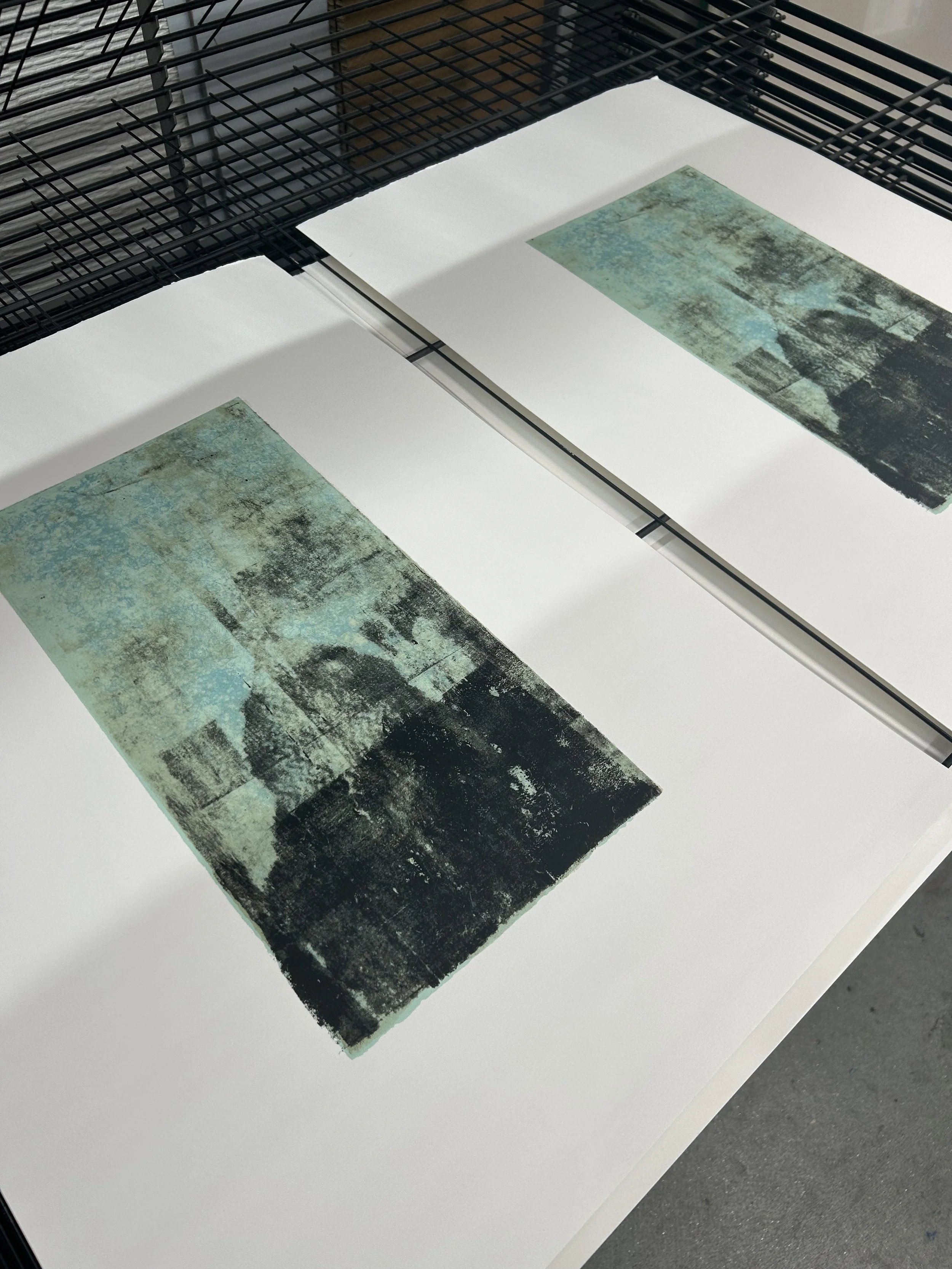
Artist Deborah Lerner in conversation with master printer Ian Wilkinson on happy accidents and finding your own voice.
Deborah Lerner is an artist who has spent years immersed in the work of the late painter Prunella Clough, cataloguing her output, living with her imagery, and wrestling with the question of how to learn from an artist without being subsumed by them. This conversation took place in Ian Wilkinson’s printmaking studio, where the edition has been produced, and where, years earlier, Ian had worked closely with Pru herself. What follows is an edited transcript.
Deborah: I suppose a good place to begin is how I ended up here. It must have been about 18 months ago that we first connected. A friend of mine was working on an edition at the studio and somehow it came up that you had worked with Prunella, so I came to visit and we had a lovely conversation. You showed me some collages that Pru had given you after you worked together as well as an unfinished print that she was working on before she passed away. So, perhaps we can start with you talking about what it was like to work with her, and the way she approached printmaking?
Ian: I worked with Pru from around 1993 until about two months before she died, on and off. We probably did eight editions together. She’d come to the studio with bits of collage, drawings, scraps of paper with ideas on.
She’d have a certain sense of where she wanted to go, but it wasn’t necessarily where she ended up. We’d work on a basis of her coming in for a day, doing some proofing, then she’d go away and think. Very occasionally she’d come back and say: yes, that’s fine, print it but most times she’d come back and totally transform it. But once she did come back, that was it. She knew what she wanted. And we’d edition it from there.
D: I remember the tissue paper you showed me when I first visited, the one that became the print ‘Chinese Flowers’, and the little ’7’; that came through accidentally during the process. I love that bit, I think it makes the whole print. It turns it from just a flower into something really special.
I: She was full of that. Happy accidents. If something happened and it worked, she was quite happy to embrace it.
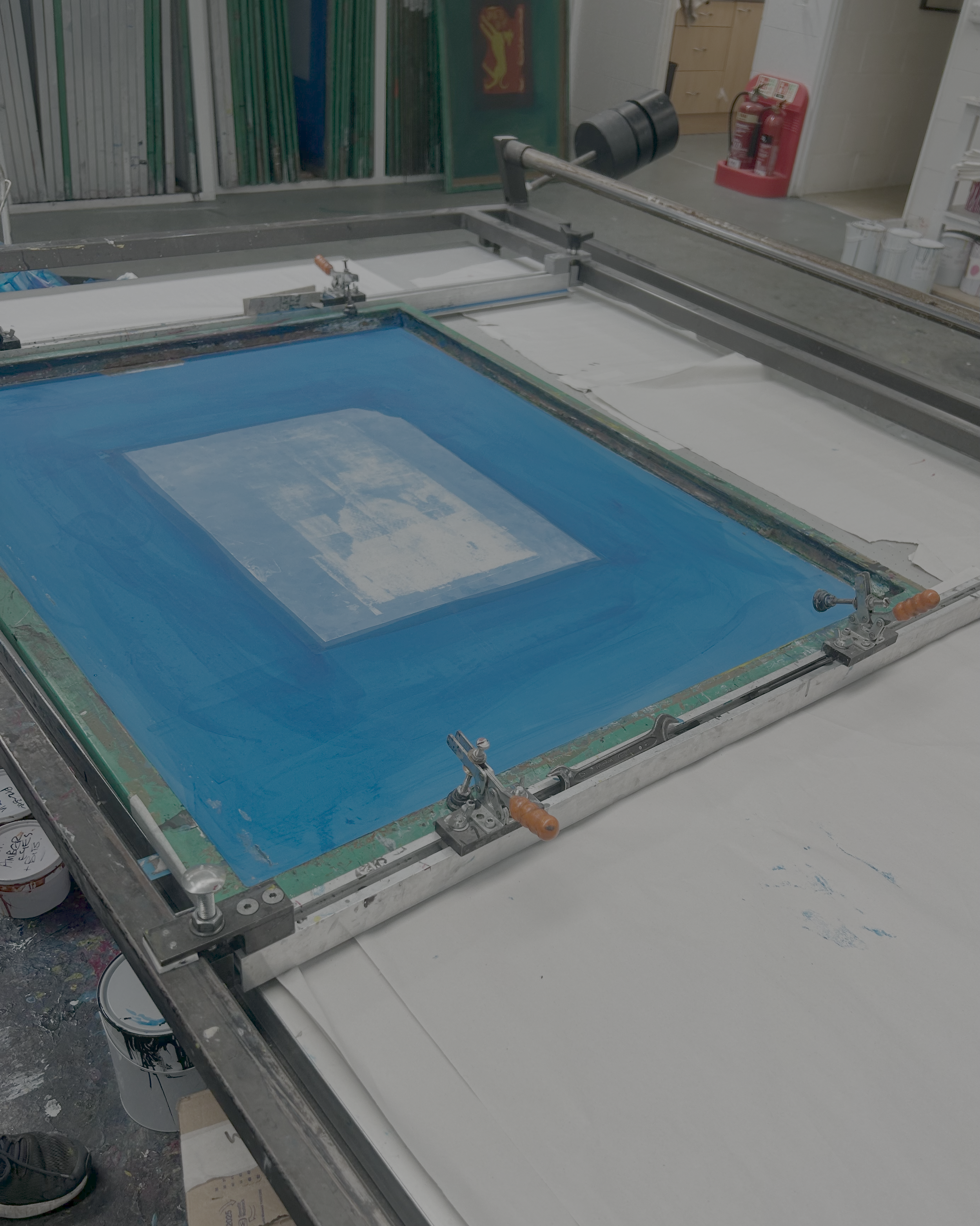
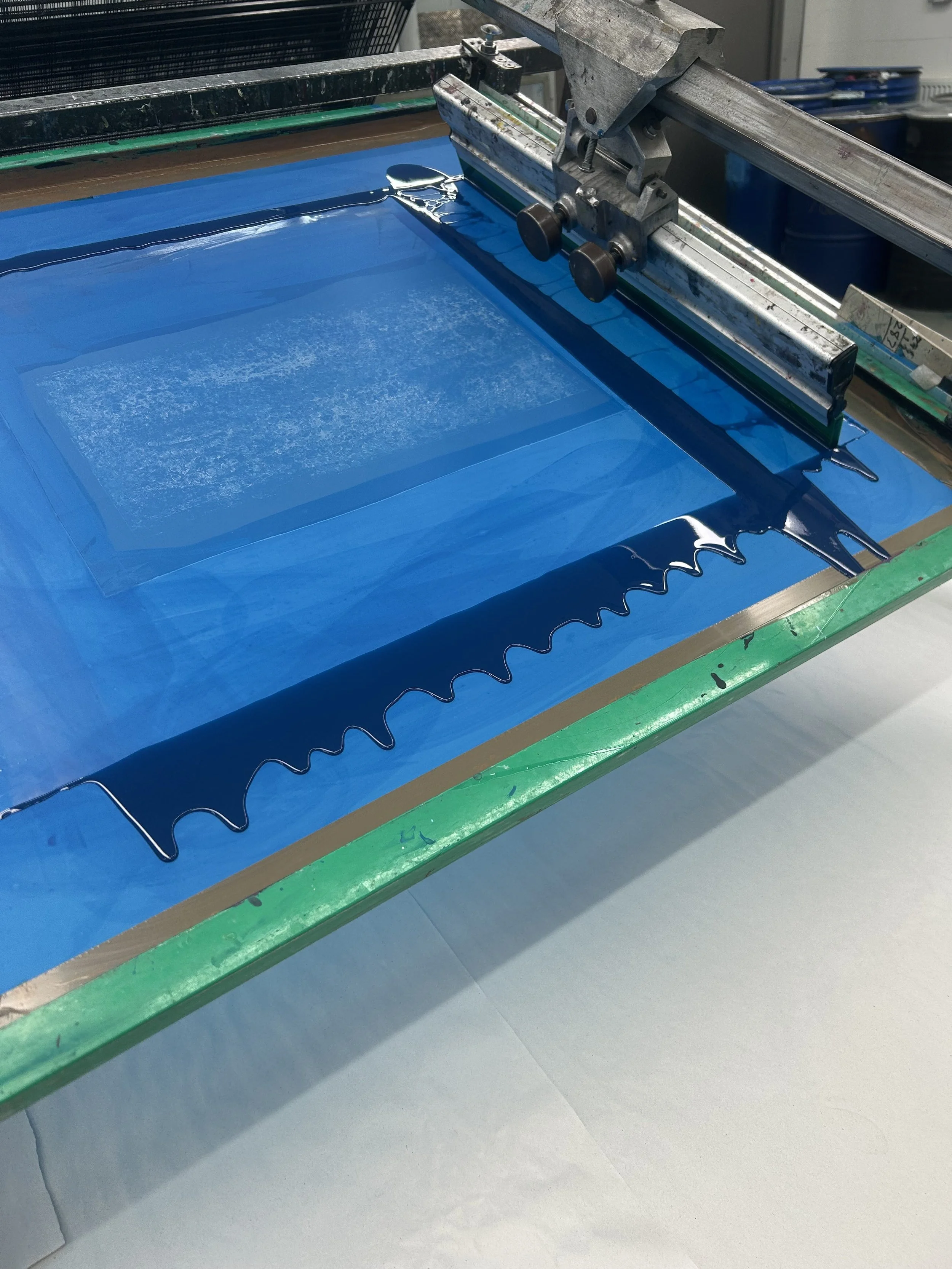
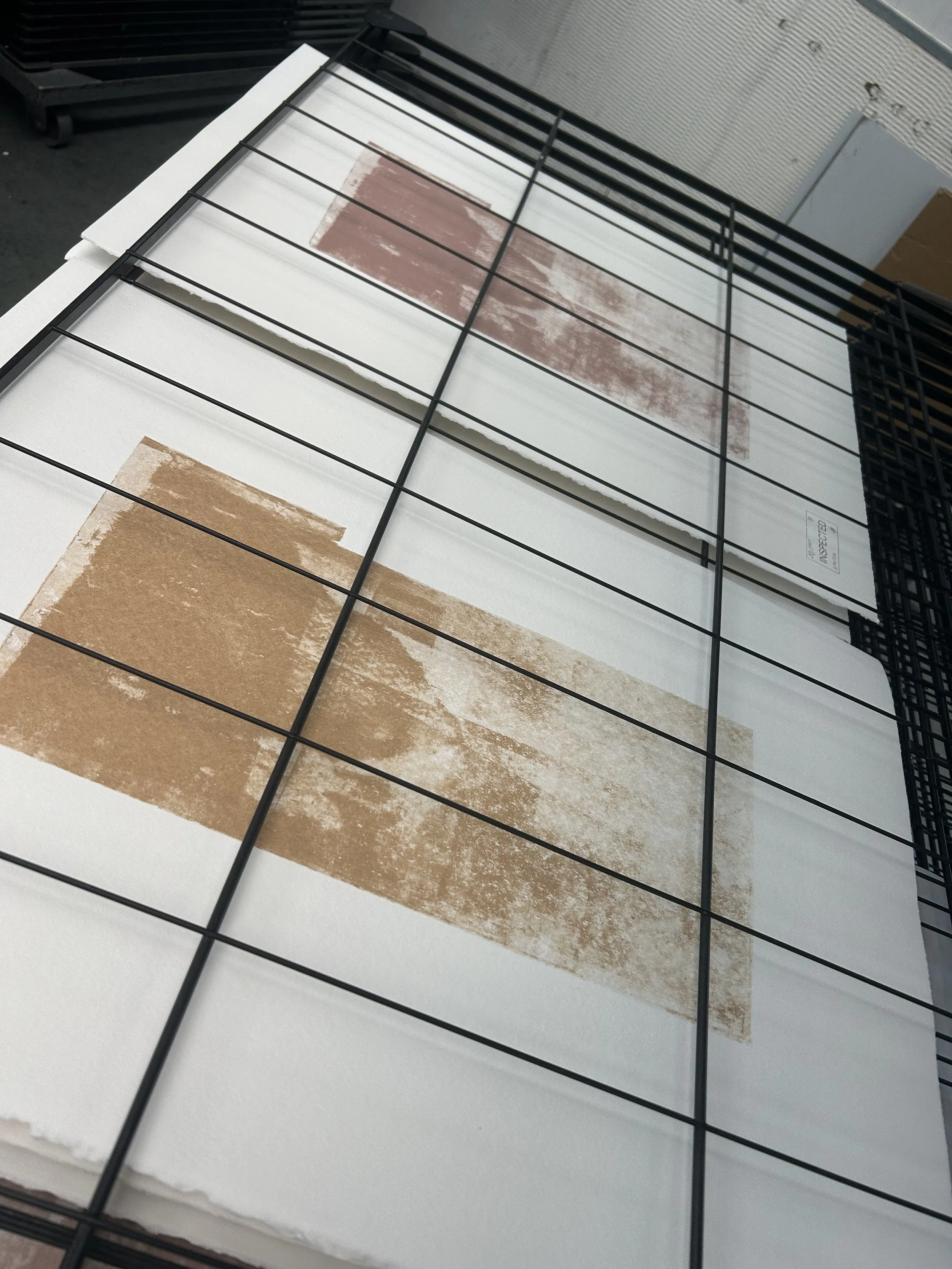
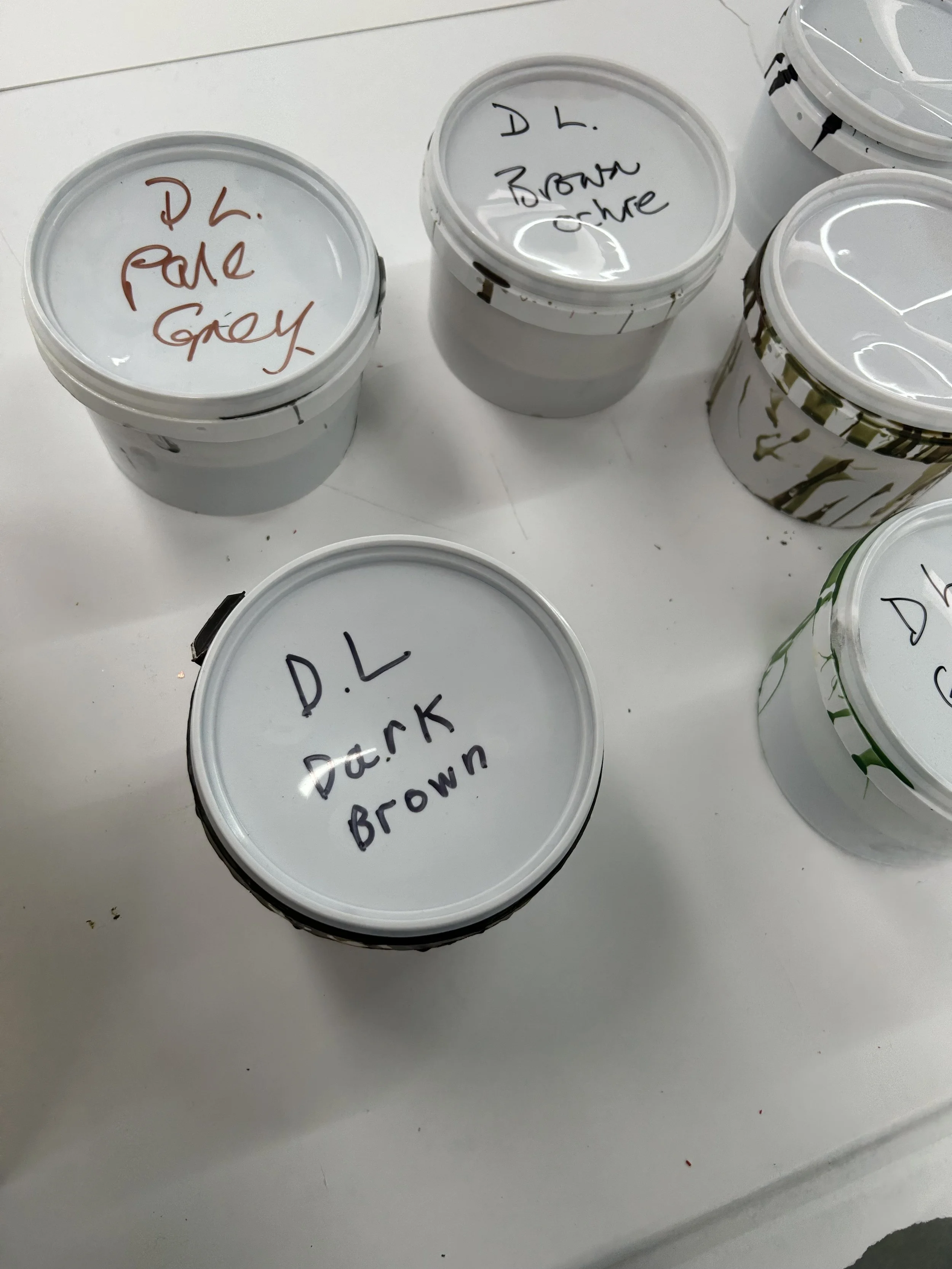
D: Here’s a question: do you think that we’ve made something that moves away from Pru and has become mine? I think I’ve said this to you before but I’m really trying to find my own language but sometimes I can’t tell if it’s me or Pru.
I: It’s very difficult for me to judge, because I know why you came here. I know your history with Pru and her imagery. To a large degree, you can’t escape it entirely. It is influencing you. But it is your stamp that you’re putting on.
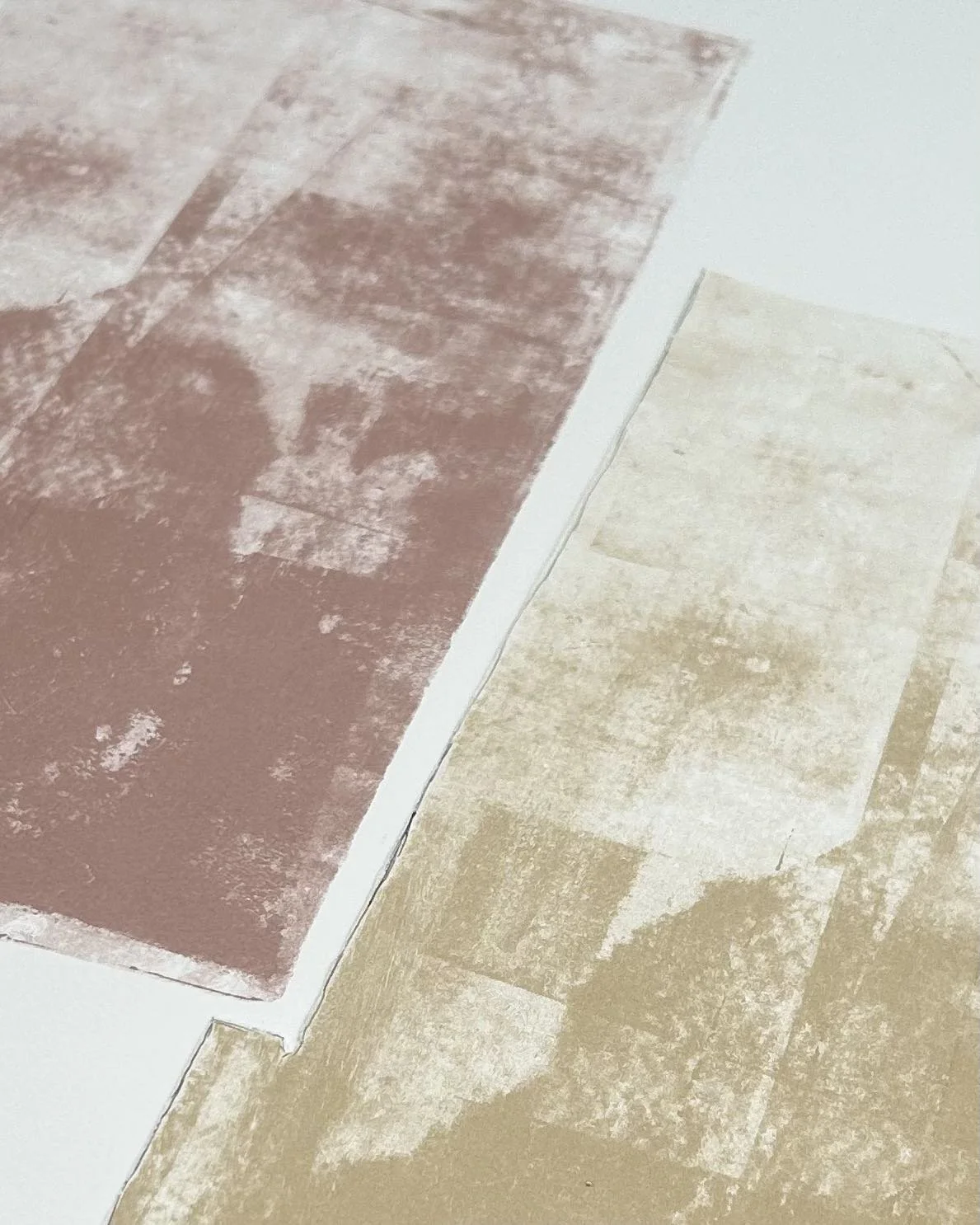
D: Now and again I make decisions that feel like I’m stepping away from her but there’s something about this shape, for instance, that feels very Pru-like to me. That shadowy quality.
I: She used a lot of tar paper.
D: Yes, she did, which has the textural black, which is the core structure of the print. I suppose at this point in my painting life, I’m not too bothered by people saying the work is close to Pru, because I’m learning so much from her. Until I really understand what she did with painting, I can’t move past it. That said, I do think I’m slowly beginning to develop my own opinions outside of what she did with painting.
I: How do you manage that? Do you tell yourself not to look at Pru’s work? That must be difficult when you’re cataloguing it all.
D: It is but I’ve paused on that specific Pru project so I’m using this time to actively look at other artists. I used to open a Pru book whenever I was stuck on a painting, and I’ve stopped doing that, but I’ve realised that I also need to actively feed other things into my brain. That said, she’ll always be there.
I: And I don’t think that’s a problem. It’s like any artist. They have other artists they rely on, to a degree. It pushes their own vocabulary. I don’t think there’s an artist alive who can’t say they’ve been influenced by somebody.
D: I remember the Bridget Riley show at the Hayward, five or six years ago. She had spent years copying Seurat paintings and I thought: oh, that seems like a good idea. I think that really influenced what I ended up doing with the public collections project. And I’ve come to realise that only once Riley understood what Seurat had done, was she able to step forward and become Bridget. It was that work of understanding that allowed her to really move forward.
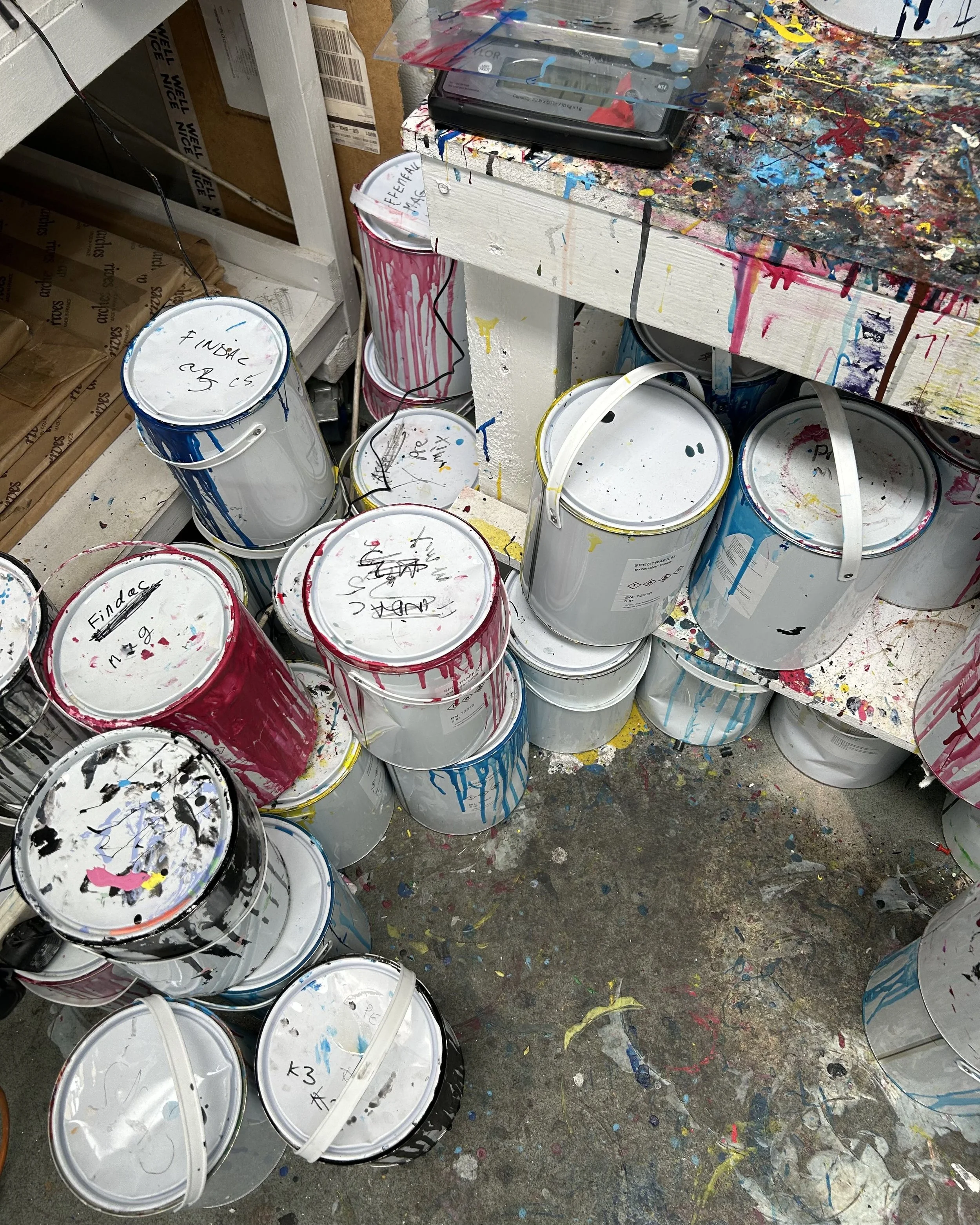
I: Pru’s oeuvre was so diverse. You look at some things and think: that’s not the same artist. But it is.
D: Especially in the last year she was alive. I think because she was unwell, she just thought: fuck it. There is work from 1999 that could be from twenty years earlier. One of the things Pru does is keep me guessing about when things were made. And I would really like that for my own work, to keep them guessing.
I: About where it sits historically?
D: Yes, because it keeps things interesting for everyone. If there is one thing I can say for sure is that Pru kept herself entertained in the studio. And I’d like to keep myself entertained.
I: Absolutely. Why else would you do it?
D: Exactly.